
Attorney At Law
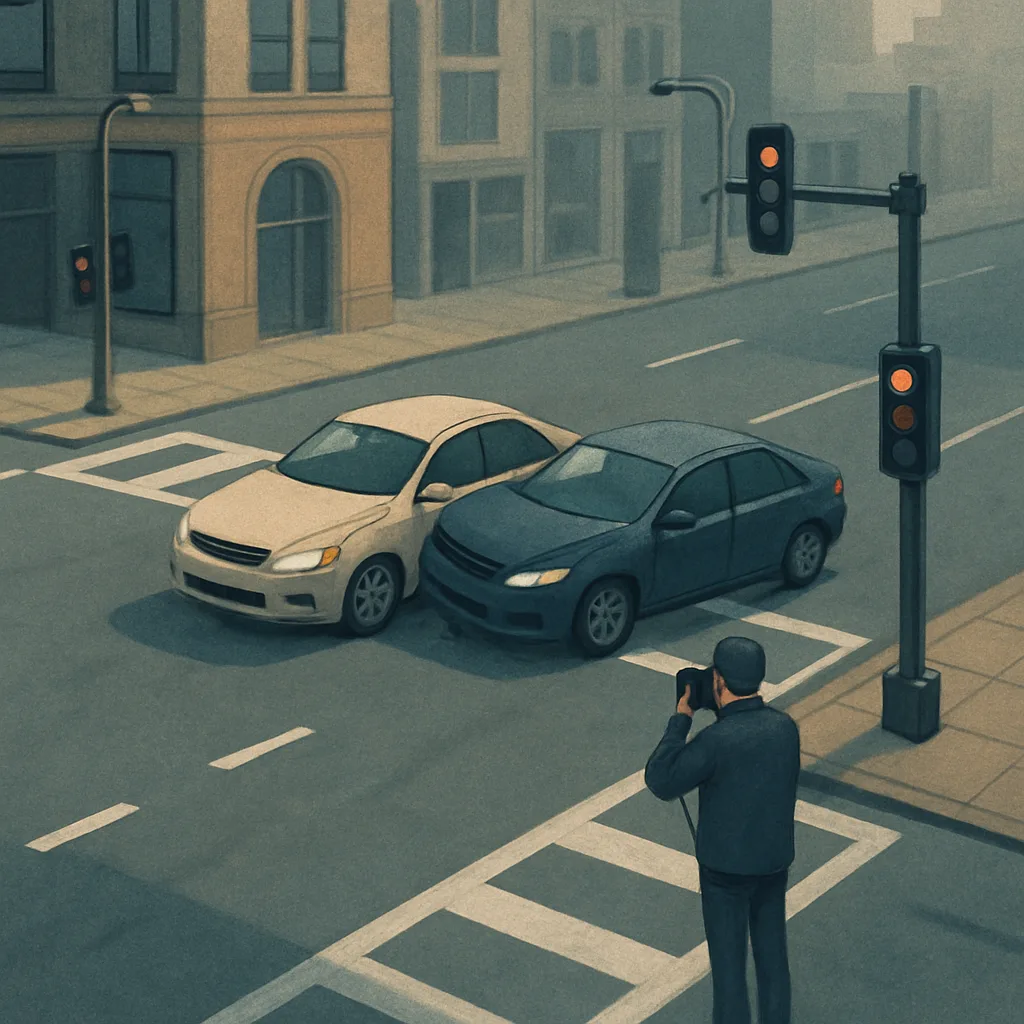
An intersection crash can produce two completely different stories. One driver may say the light was green, while the other insists the signal had changed—or that the other vehicle turned across the lane. At a busy Chicago intersection, traffic may move quickly, witnesses may leave, and vehicle positions can change before anyone has a chance to document them.
For someone searching for a Chicago intersection accident lawyer, the central issue is often evidence: which information can preserve a person’s account when the drivers disagree? Vaziri Law approaches these cases by examining the available proof rather than assuming that a citation, an airbag deployment, or a particular type of vehicle damage automatically establishes liability.
This article discusses the evidence that may matter after a signalized or uncontrolled intersection crash, including photographs, witness accounts, traffic-signal information, vehicle data, accident reconstruction, and medical records. It also explains common preservation concerns and why a complete review may be important before fault is assessed.
Chicago Intersection Accident Lawyer: What Evidence Can Show About Fault?
Intersection liability is rarely decided by one fact alone. In Chicago, IL, an investigation may compare the drivers’ statements with the physical scene, roadway design, vehicle movements, and records created shortly before or after the collision. The goal is to build a consistent timeline: where each vehicle was, what each driver could see, and how the impact occurred.
Photographs and scene details
Photos taken safely at the scene may show vehicle positions, lane markings, traffic controls, sight obstructions, skid marks, debris, weather conditions, and damage. Wide-angle images can provide context that close-up damage photographs miss. Pictures of both vehicles may also help preserve crush points and the direction of impact before repairs or towing alter them.
A photograph does not prove who was at fault by itself. For example, T-bone damage may be consistent with a right-of-way dispute, but it does not necessarily establish which vehicle entered first or whether visibility, speed, or a turning movement affected the collision. The same caution applies to red light crash evidence in Chicago: a damaged vehicle or a driver’s belief about the signal may need support from other sources.
Independent witnesses may remember the signal color, lane positions, turn sequence, or whether a vehicle appeared to stop. Their contact information should be preserved when available. Nearby businesses, residences, transit vehicles, or private vehicles may also have exterior camera footage, although recording angles, retention periods, and access vary.
Signal Records, Vehicle Data, and Intersection Reconstruction
When drivers disagree about a traffic light or turn, objective records may help test each account. In Chicago, IL, potentially relevant sources can include a Chicago Police Department crash report, City of Chicago traffic-signal information, nearby camera footage, vehicle event data, and photographs collected by investigators. Availability depends on the intersection, the vehicles involved, the time that has passed, and applicable access procedures.
Traffic-signal information
Signal timing is more complicated than simply asking whether a light was red or green. An investigation may examine the sequence of signals, permitted turn phases, yellow and all-red intervals, lane configuration, and whether construction or unusual traffic control affected the intersection. Signal records may help determine whether a driver’s account is consistent with the timing, but they may not answer every question about speed, distance, or when a vehicle entered the intersection.
Vehicle data and physical evidence
Some vehicles may store limited information about speed, braking, seat-belt use, or other conditions around a significant event. Access and interpretation depend on the vehicle, the event recorder, preservation of the vehicle, and other technical factors. A qualified professional may need to interpret the data in context rather than treating one recorded value as conclusive.
Physical evidence can include crush patterns, paint transfer, broken parts, roadway debris, and the final rest positions of the vehicles. Intersection collision reconstruction may combine those details with measurements, photographs, vehicle specifications, signal information, and witness statements. Reconstruction is an analytical process; it is not a substitute for reliable underlying evidence.
Illinois traffic rules and personal injury procedures apply based on the circumstances and jurisdiction, and laws may change. A dispute may also involve the Circuit Court of Cook County if a civil case is filed, but the proper forum and process depend on the claim. A legal professional can explain how Illinois rules may apply to a particular collision.
Preserving Your Version of a Disputed Intersection Crash
Evidence can become harder to locate as time passes. People may forget what they saw, vehicles may be repaired or sold, and surveillance systems may overwrite older footage. Generally speaking, preserving information early can make later evaluation more reliable.
Useful steps may include:
- Photographing the vehicles, roadway, traffic controls, lane markings, and surrounding sightlines when it is safe to do so.
- Keeping copies of photographs, tow records, repair estimates, insurance correspondence, and the crash report.
- Recording a personal account of the collision while the sequence is still fresh, without guessing about facts that are not known.
- Identifying witnesses and noting where they were positioned, rather than relying only on a name or brief description.
- Preserving potentially relevant dashcam, phone, or vehicle-camera footage in its original form.
- Following medical providers’ instructions and keeping records of symptoms, appointments, restrictions, and bills without attempting to diagnose an injury independently.
People also sometimes assume that a police citation ends the liability analysis. A citation may be relevant, but it may not resolve a civil claim. Similarly, statements made to an insurer, social-media posts, or an incomplete account of symptoms can create confusion about what happened or how the collision affected someone. Depending on the circumstances, an attorney may help organize the evidence, identify missing sources, and communicate with insurers while evaluating possible claims and defenses.
Understanding shared fault
Illinois generally recognizes comparative-fault principles, meaning responsibility may be allocated among parties based on the evidence. The effect of any assigned share of fault can depend on the facts and applicable law. This is one reason the question “who is at fault in a left-turn accident?” may require more than identifying which vehicle was turning. The analysis may include right-of-way rules, signal phases, speed, lookout, and whether either driver had a reasonable opportunity to avoid the impact.
Frequently Asked Questions
Does a police report decide who is liable for an intersection crash?
Not necessarily. A police report may document statements, roadway conditions, citations, and an officer’s observations, making it potentially important evidence. However, a civil liability decision may also consider photographs, independent witnesses, signal information, vehicle data, medical records, and expert analysis. The report’s contents and weight depend on what the officer observed and what information was available at the scene.
What if the other driver says I ran the red light?
A conflicting accusation does not automatically establish fault. Depending on the circumstances, relevant information may include signal timing, dashcam or nearby video, witness accounts, vehicle positions, damage, roadway measurements, and each driver’s opportunity to observe and respond. Avoiding speculation and preserving available evidence may help an attorney evaluate whether the competing accounts can be tested against objective information.
Can a passenger be a witness in an Illinois intersection case?
Yes, a passenger may have firsthand information about what the driver and other vehicle did. Because a passenger may be viewed as connected to one side, independent witnesses and physical evidence can also matter. A passenger’s account should accurately describe what was seen or heard, including the viewing position and any limitations, rather than adopt conclusions about legal fault.
Why might medical records matter in a disputed crash claim?
Medical records can help document when symptoms were reported, what care was provided, and how a person’s condition was evaluated over time. They may also address prior conditions, intervening events, or stated limitations, depending on the records. They do not determine traffic fault, but they can be relevant to understanding the injury component of a personal injury claim.
How Vaziri Law Can Help
Vaziri Law is dedicated to helping Chicago, IL, residents understand the evidence issues that can arise after a disputed intersection collision. The firm may review photographs, reports, witness information, signal-related records, vehicle evidence, and medical documentation to develop a clearer picture of the incident. Its team is committed to fighting for clients’ rights while recognizing that every crash has different facts, available records, and legal issues.
If you are dealing with conflicting accounts after a Chicago intersection crash, contact Vaziri Law for a free consultation or case evaluation. The firm is ready to evaluate your situation and discuss your legal options.
The information in this article is for educational purposes only and does not constitute legal advice. Contact a qualified attorney licensed in Chicago, IL for advice specific to your situation.