

Attorney At Law
Delivery trucks are part of daily life in Chicago. They stop along busy streets, enter alleys, pull into loading zones, and share roadways with cars, bicycles, and pedestrians. When a delivery van, box truck, or other commercial vehicle causes a collision, the driver may not be the only potentially responsible party. The company that employs the driver, owns the vehicle, controls the route, or manages its maintenance may also become important.
A Chicago delivery truck accident lawyer can help investigate those relationships. In this guide, Vaziri Law explains when an employer may face liability, what information can identify a commercial defendant, and why early evidence can matter in a delivery driver accident claim in Illinois. The discussion covers employment status, vehicle ownership, company control, maintenance, loading, route demands, and practical steps for preserving useful information.
When Can a Chicago Delivery Truck Accident Employer Be Liable?
Employer liability depends on the facts of the crash and the relationship between the driver and the business. Under general Illinois legal principles, an employer may be responsible for an employee’s conduct when the employee was acting within the scope of assigned work. That question is not always obvious after a collision.
Was the driver working for the company?
A driver may be a direct employee, a temporary worker, a leased operator, or an independent contractor. A company’s labels do not necessarily answer every legal question. Investigators may examine who hired and paid the driver, who supplied training, who controlled the schedule, and who had authority over the delivery work.
The driver’s work status can affect who should receive notice of a claim and which records may exist. In Chicago, a delivery vehicle may carry a company’s branding even when the person driving it has a different contractual relationship with that company.
Was the driver acting within the work assignment?
A delivery driver traveling between stops, returning to a facility, or making a scheduled pickup will often be acting for work purposes. A substantial personal deviation may raise a different question. Route data, delivery instructions, dispatch messages, time records, and electronic vehicle information may help establish what the driver was doing at the time of the crash.
Employer responsibility may also be evaluated separately from the driver’s conduct. For example, evidence about hiring, training, supervision, vehicle maintenance, cargo loading, or scheduling could raise additional issues depending on the circumstances and available proof.
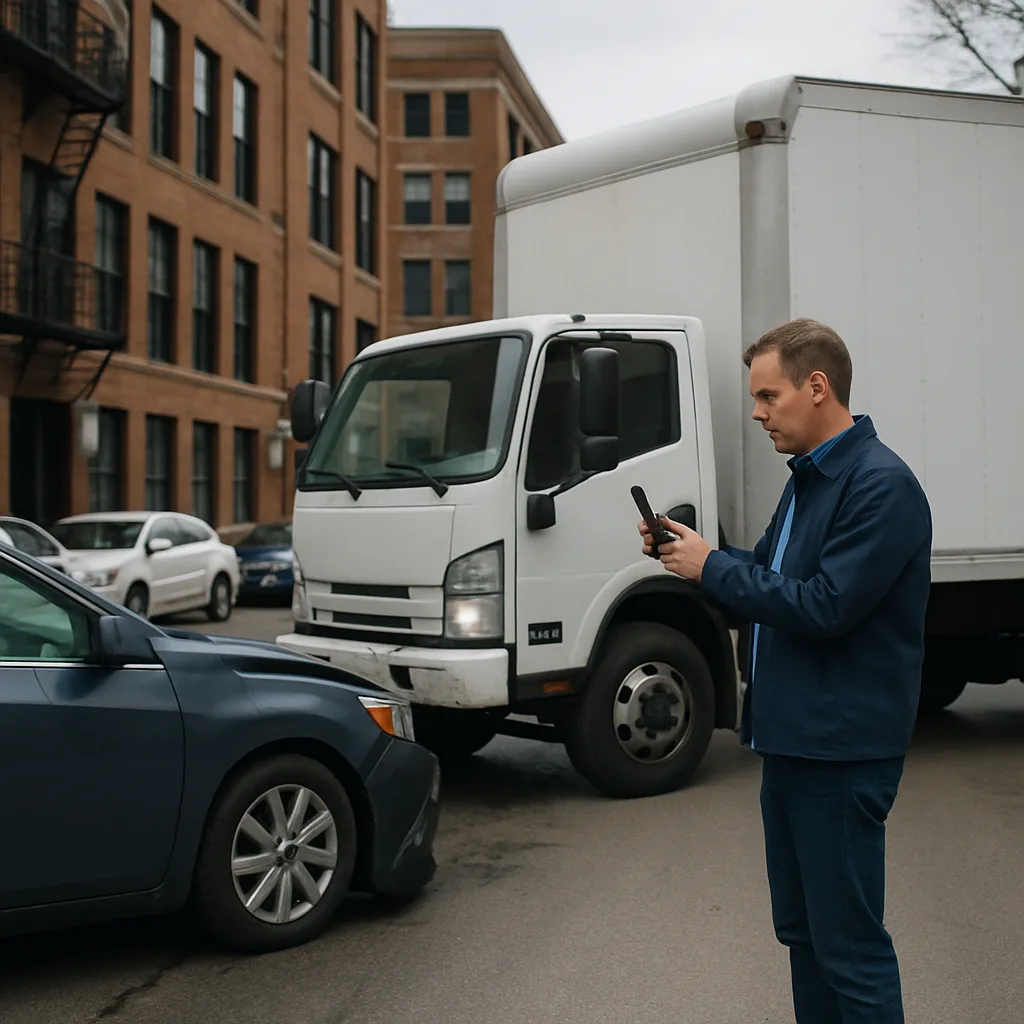
What Evidence Can Identify the Responsible Company?
A commercial vehicle accident investigation often begins with information that disappears quickly. A damaged vehicle may be repaired, surveillance footage may be overwritten, and delivery records may be retained for limited periods. If you are physically able, collecting basic identifying details can help an attorney evaluate the potential defendants without requiring you to determine liability yourself.
Useful information may include:
- Photographs of the vehicle from several angles, including the front, rear, sides, and any visible company markings.
- The truck or van’s license plate, unit number, vehicle number, or other identifying feature, captured without placing yourself in danger.
- The driver’s name, employer, contact information, insurance information, and description of the driver’s role, when available.
- Names and contact information for witnesses, including people who saw the collision, the vehicle’s movements, or the driver’s conduct immediately beforehand.
- Photographs of vehicle damage, the roadway, lane positions, traffic controls, loading areas, weather conditions, and nearby businesses with possible cameras.
- Delivery receipts, packages, uniforms, dispatch references, route information, or other neutral details that identify the business connected to the trip. Any document shared with counsel should be preserved in its original form.
A company vehicle crash in Chicago may involve a national retailer, a local delivery service, a contractor, or a business using a fleet vehicle. The visible name on a van can be a starting point, but it may not identify the vehicle owner, driver’s employer, insurer, or responsible logistics company. An attorney may use public business information, vehicle records, formal requests, and discovery to clarify those relationships.
Illinois claims can also involve more than one potentially responsible party. Depending on the evidence, questions may include whether another motorist contributed to the collision, whether a maintenance provider handled the vehicle, or whether cargo was loaded in a way that affected safe operation. These issues are fact-specific and may require technical review.
Common Investigation Issues After a Delivery Vehicle Crash
The circumstances surrounding a delivery route can create evidence that is different from what exists in an ordinary passenger-car collision. A company may have records showing the driver’s assigned stops, expected completion times, rest periods, vehicle inspections, and communications with dispatch. Those records may help establish whether the driver was working, whether the route created unusual time pressure, and whether the vehicle was being properly maintained.
Important questions may include:
- Who owned, leased, rented, or maintained the vehicle?
- Who hired, trained, supervised, and paid the driver?
- Was the driver completing a delivery, pickup, return trip, or personal errand?
- Did the vehicle have known mechanical problems or recent inspection concerns?
- Was cargo secured and loaded in a way that allowed safe handling and visibility?
- Did the company use dispatch software, GPS, cameras, or other systems that recorded the trip?
A person pursuing a delivery driver accident claim in Illinois should also be cautious about making assumptions based only on the driver’s statements at the scene. The driver may not know which company owns the vehicle or how the business is structured. Similarly, a business name on a package may identify a sender or retailer rather than the carrier operating the truck.
Medical documentation and collision records can be important as well. Seeking appropriate medical attention is a personal health decision that should be guided by qualified medical professionals. Keeping copies of incident reports, photographs, repair estimates, correspondence, and other records can help preserve a consistent account of what occurred.
Because Illinois deadlines and liability rules can vary with the facts and may change over time, an attorney may evaluate timing, available insurance, comparative responsibility, and the identities of all potentially involved parties. Vaziri Law can assess these issues for people injured in Chicago, IL and surrounding communities.
Frequently Asked Questions
Can a delivery company be responsible if the driver was not a direct employee?
Possibly, but the answer depends on the working relationship and the facts of the crash. A business may use contractors, staffing agencies, leasing arrangements, or third-party delivery services. Investigators may examine who controlled the driver’s work, vehicle, schedule, and delivery duties. The company’s contract label is relevant, but it may not resolve every liability question under Illinois law.
What if I only saw part of the delivery vehicle’s company marking?
Partial information can still be useful. A photograph, vehicle color, unit number, package description, route location, or witness account may help narrow the vehicle or business involved. Nearby businesses may also have exterior cameras. Avoid following a vehicle or creating a safety risk to obtain more information. An attorney may help determine what additional records or investigative methods are appropriate.
Could a vehicle owner be liable even if it did not employ the driver?
Potentially, depending on the ownership arrangement, permission to use the vehicle, maintenance responsibilities, and other facts. The owner, lessor, employer, contractor, and insurer may have different roles. Identifying each role is part of a commercial vehicle accident investigation. A lawyer can review available documents and explain which liability theories may be relevant under Illinois law.
What happens if the delivery truck leaves before I get its information?
Report the collision through appropriate channels and preserve any information you have, such as photographs, the direction of travel, vehicle appearance, time, location, company colors, and witness contacts. Nearby surveillance may be important, but retention periods vary. In Chicago, an attorney may help evaluate how to request available footage and identify the vehicle or business without relying on guesswork.
How Vaziri Law Can Help
Vaziri Law is dedicated to helping injured motorists understand the legal and factual issues that may follow a commercial vehicle crash. The firm can evaluate available photographs, vehicle markings, witness information, collision records, delivery details, and evidence concerning employment, ownership, maintenance, loading, and company control.
The team is committed to fighting for clients’ rights while explaining the process in clear, practical terms. If you were injured in a delivery van, box truck, or company vehicle collision in Chicago, IL, contact Vaziri Law for a free consultation or case evaluation. An attorney can discuss your circumstances and help you explore your legal options.
The information in this article is for educational purposes only and does not constitute legal advice. Contact a qualified attorney licensed in Chicago, IL for advice specific to your situation.