

Attorney At Law
If you are asking, “What should you do after a Chicago car accident if the other driver is uninsured?” you are not alone. A crash can be difficult enough without knowing who may pay for medical care, vehicle repairs, lost income, or other losses. The first priorities are safety, prompt reporting, appropriate medical attention, and preserving information while it is still available.
For a practical overview of notifying the appropriate parties, see how to report an uninsured crash after a collision. Vaziri Law can also serve as a knowledgeable resource when insurance coverage, fault, or the extent of an injury is unclear. This guide explains immediate steps, Illinois uninsured and underinsured motorist coverage, documentation, claim considerations, and when speaking with a Chicago uninsured motorist accident lawyer may be useful. Laws and insurance procedures vary by location and may change over time, so the information below is general.
What to Do After a Chicago Car Accident If the Other Driver Is Uninsured
Report the Crash and Confirm the Insurance Status
If anyone may be injured, traffic is blocked, or the circumstances require emergency assistance, contacting 911 may be appropriate. A responding agency may document the collision, and the resulting report can become an important part of an insurance claim or later legal review. In Chicago, the Chicago Police Department or another responding agency may provide information about obtaining an available report.
Exchange names, contact details, driver’s license information, vehicle details, and insurance information if available. Do not rely only on the other driver’s statement that a policy exists. Photograph the insurance card or other information, and ask your own insurer to verify whether the policy was active on the crash date. If the driver has no coverage, document that fact and retain any written communication from the insurer.
Promptly notify your own automobile insurance company, even if you are still gathering details. A policy may require timely notice. Reporting a claim is not the same as agreeing with an insurer’s assessment of fault or the value of your losses. The linked reporting guide can help organize the information generally requested after an uninsured crash.
Protect the Scene and Your Safety
If it is safe, move away from traffic and avoid arguing about fault. Do not speculate in texts, social media posts, or recorded statements about what caused the collision. A calm, factual description is generally more useful than an immediate conclusion about responsibility.
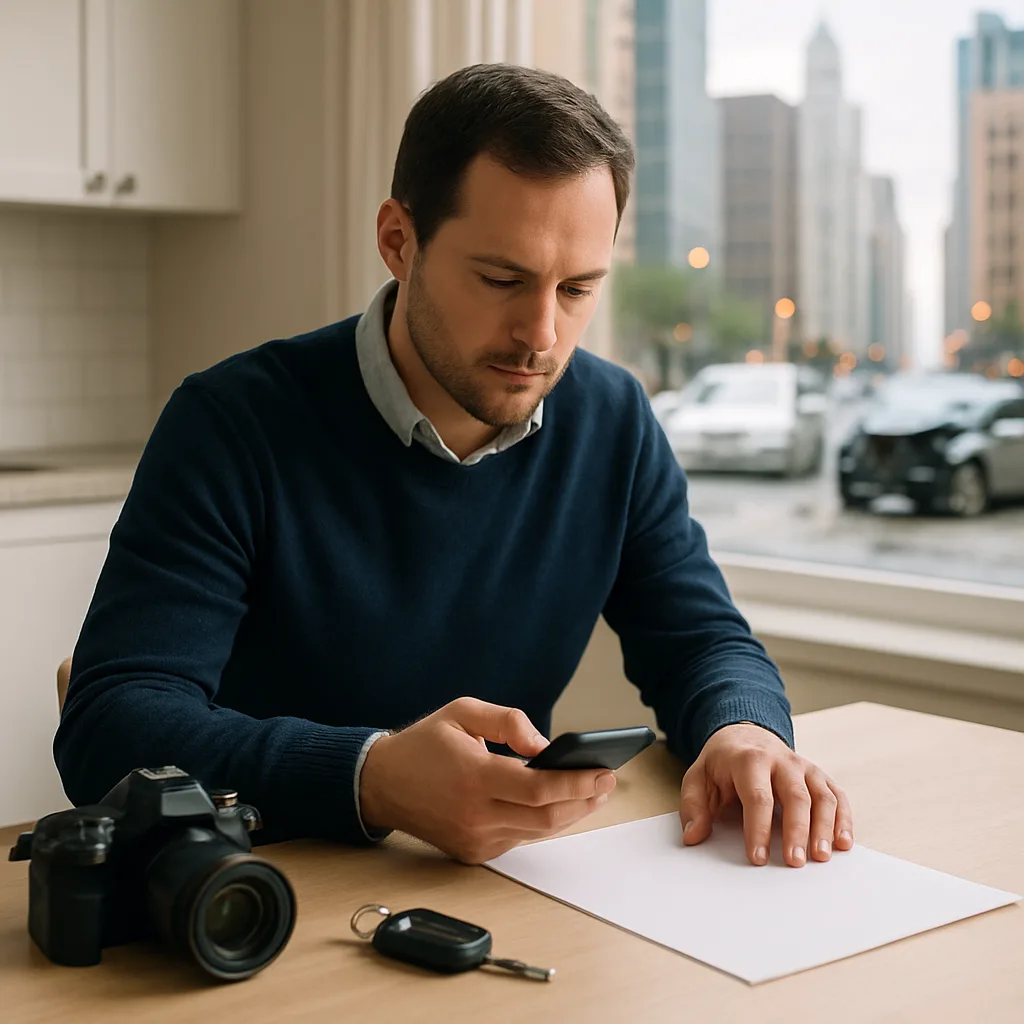
Review Illinois Uninsured and Underinsured Motorist Coverage
When the at-fault driver lacks liability insurance, the injured person may need to look to applicable uninsured motorist coverage rather than the other driver’s insurer. In Illinois, automobile policies commonly address uninsured and underinsured motorist protection, but coverage, limits, exclusions, notice requirements, and dispute procedures depend on the policy and the circumstances. A policy may also contain provisions affecting household members or vehicles, so identifying every potentially relevant policy can matter.
Underinsured motorist coverage is a separate issue. It may become relevant when the responsible driver has insurance, but the available limits do not appear sufficient for the losses claimed. Whether that coverage applies can depend on the policy language, the amount of available liability insurance, the injuries and damages involved, and required insurer communications.
Gather the Information an Insurer May Need
- The crash report or incident information;
- Photographs and videos of vehicles, roadway conditions, traffic signals, and visible damage;
- Names and contact information for witnesses;
- Medical records and bills supplied by providers;
- Proof of vehicle repairs, towing, storage, or rental expenses;
- Employment information related to claimed time away from work; and
- Your automobile policy, declarations page, endorsements, and insurer correspondence.
Before signing a release or accepting payment, it may be useful to understand what claims and coverage rights the document addresses. An insurer’s request for a recorded statement, medical authorization, or broad release can have legal significance. Depending on the situation, an attorney may review the request and explain potential concerns.
For additional background on presenting evidence and communicating with insurers, review how to make a Chicago car accident claim. Illinois law applies to an Illinois crash, but policy provisions and procedural requirements can vary. A claim that may eventually proceed in Cook County Circuit Court can still involve extensive insurance investigation before litigation is considered.
Preserve Evidence, Avoid Common Mistakes, and Assess Legal Help
Evidence can become harder to locate as time passes. Keep the damaged vehicle in substantially the same condition until photographs, inspections, or repair documentation are complete when reasonably possible. Save photographs in their original form, preserve dashcam footage, and write down what you remember about the road, weather, traffic signals, and sequence of events. Do not alter or discard relevant messages, estimates, or correspondence.
Health information also deserves careful organization. Follow the directions provided by your medical professionals and keep records of appointments, bills, restrictions, and symptoms as they develop. This is not a diagnosis or treatment recommendation; it simply helps preserve documents that may be relevant to a claim. The best steps after an Illinois car accident offers broader guidance on immediate safety, medical documentation, and evidence preservation.
Common claim problems may include:
- Waiting too long to notify an insurer;
- Assuming the other driver’s lack of insurance ends the inquiry;
- Giving inconsistent accounts because key facts were not recorded;
- Accepting a settlement before understanding the full scope of the release;
- Overlooking another potentially applicable policy; or
- Posting photographs or comments that can be taken out of context.
A Chicago uninsured motorist accident lawyer may be helpful when injuries are serious, fault is disputed, coverage is delayed or denied, several policies may apply, or an insurer is pressing for a quick resolution. Counsel may also help evaluate evidence, communicate with insurers, and explain possible claim or litigation procedures without promising a particular result. The decision to seek representation depends on the facts, policy language, and the nature of the losses.
Frequently Asked Questions
Can I make a claim if the uninsured driver caused the Chicago crash?
Possibly. An injured person may have a claim under an applicable uninsured motorist provision, subject to the policy terms, proof of fault, notice requirements, and the nature of the losses. The driver’s lack of insurance does not automatically establish every part of a claim. The insurer may investigate liability and damages, and the available process can differ by policy. A licensed Illinois attorney can review the specific coverage and facts.
What if the other driver has insurance, but the limits are too low?
An underinsured motorist claim may be relevant when the responsible driver’s available liability coverage does not adequately address the claimed losses. Whether benefits are available depends on the policy, the amount paid or available under the other driver’s coverage, and the evidence supporting the injuries and damages. Before resolving the liability claim, it may be important to understand how a proposed release affects any underinsured motorist rights.
Should I speak with the other driver’s insurance company?
You may receive calls or requests for information from an insurer, but you do not have to guess at the legal effect of a recorded statement, authorization, or settlement document. Providing basic identifying and accident information may be part of claim handling, while broader requests can raise separate concerns. Consider reviewing significant requests carefully and obtaining advice specific to your circumstances before signing documents.
How long do I have to pursue an uninsured motorist claim in Illinois?
The timing can depend on several factors, including the type of claim, the policy’s notice and dispute provisions, and Illinois deadlines that may apply to a lawsuit. Waiting can also make evidence and witness recollections more difficult to preserve. Because a missed deadline or late notice may affect rights, a person with a potential claim may wish to seek a prompt review from a licensed attorney.
How Vaziri Law Can Help
Vaziri Law is dedicated to helping Chicago-area injury clients understand the insurance and evidence issues that can follow a collision with an uninsured or underinsured driver. The firm is committed to fighting for clients’ rights while evaluating the facts, applicable policies, medical documentation, and communications from insurers. A careful review may help identify questions about fault, coverage, releases, and the next stage of a claim.
If you are looking for Chicago car accident lawyers who evaluate fault and recovery, Vaziri Law is ready to evaluate your situation. Contact the firm to request a free consultation or case evaluation and discuss your available options.
The information in this article is for educational purposes only and does not constitute legal advice. Contact a qualified attorney licensed in Chicago, IL for advice specific to your situation.