

Attorney At Law
If a vehicle strikes you while you are walking in Chicago, you may be dealing with pain, unanswered questions, and an insurance company that has its own version of what happened. If you are a Chicago pedestrian struck by a car, when can you bring a claim? Generally, a claim may be possible when another person’s negligence caused the collision and you suffered legally recognized harm. The facts matter, including whether you were in a crosswalk, the traffic signal, visibility, vehicle speed, and what each person could see.
A Chicago car accident lawyer who evaluates fault and evidence can help explain how these issues may affect a potential case. Vaziri Law provides a knowledgeable point of contact for reviewing the crash, available evidence, and injury-related documentation. This article discusses what to preserve immediately, how disputed accounts are examined, how injuries and expenses may be documented, and why Illinois deadlines should not be overlooked.
When Can a Chicago Pedestrian Struck by a Car Bring a Claim?
A pedestrian injury claim generally requires more than proof that a collision occurred. The available evidence must help connect the driver’s conduct to the injuries and losses claimed. A driver may be responsible if, depending on the circumstances, the driver failed to yield, ignored a signal, turned without keeping a proper lookout, drove too fast for conditions, or otherwise failed to use reasonable care.
Crosswalks, Signals, and Turning Vehicles
Crosswalk location and traffic-control signals can be important. A pedestrian lawfully crossing with a walk signal may have evidence supporting the right of way, while a driver turning across a crosswalk may have had a duty to watch for people in the crossing area. That does not make every case automatic. The timing of the signal, the pedestrian’s path, the vehicle’s movement, and the accounts of witnesses still require review.
Visibility, Parked Cars, and Roadway Design
Chicago conditions can create complex factual questions. Parked vehicles, construction activity, rain, darkness, glare, an obstructed view, or a poorly designed crossing may affect what the driver and pedestrian could reasonably observe. Evidence may also raise questions about roadway maintenance, signal operation, or the involvement of a public entity. These issues are fact-specific and may require records or testimony beyond the initial crash report.
What to Document After a Pedestrian Crash in Chicago
Evidence can disappear quickly. Vehicles are repaired, surveillance systems overwrite recordings, and memories change. If you are physically able, or if someone assisting you can do so, consider preserving information without guessing about fault or interfering with an investigation.
Helpful documentation may include:
- Photographs or video of the intersection, crosswalk, traffic signals, lighting, parked vehicles, road surface, and sight lines.
- The vehicle’s location, visible damage, identifying information, and any nearby businesses or buildings with exterior cameras.
- Names and contact information for witnesses, including people who saw the moments before or after impact.
- The clothing, shoes, phone, bicycle, or other personal items involved, stored in their condition after the crash.
- The date, time, weather, lighting, signal phase, and direction of travel, recorded as soon as reasonably possible.
- Medical records, discharge paperwork, bills, prescriptions, work-loss information, and notes about symptoms or limitations.
Seek emergency or follow-up medical care based on your circumstances. A medical record can document what was reported and observed, but it is not a substitute for legal analysis. For more practical preservation guidance, review these immediate steps after an Illinois car accident.
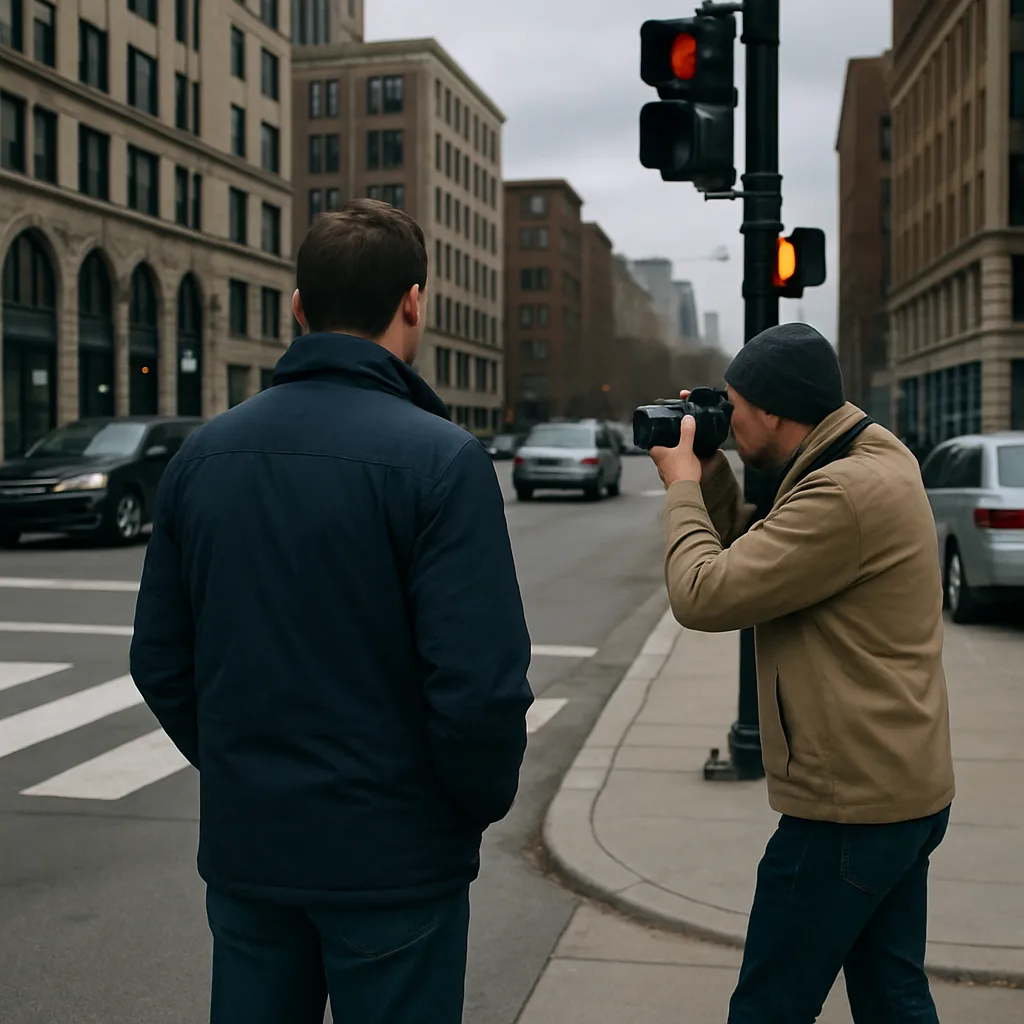
Witnesses may remember whether the pedestrian had a walk signal, whether the car accelerated into a turn, or whether a parked vehicle blocked visibility. Surveillance from a store, apartment building, transit area, or traffic-management system may show the sequence more clearly than a person who arrived after impact. Promptly identifying possible sources matters because retention periods and access practices vary.
Responding to Disputed Accounts and Injury-Related Issues
A driver, insurer, or witness may claim that the pedestrian was distracted, crossed outside a crosswalk, wore dark clothing, or entered the roadway unexpectedly. Those allegations do not decide liability by themselves. In Chicago, a careful review may compare the statements with physical evidence, signal timing, vehicle damage, event-data information when available, photographs, video, and independent witnesses.
Illinois generally uses a comparative-fault approach in personal injury cases. In practical terms, a fact finder may consider whether more than one person contributed to the occurrence or the claimed harm. The effect of any assigned responsibility can depend on the facts and applicable Illinois law. A disputed account should therefore be addressed with evidence rather than speculation or an angry exchange with the insurer.
Medical Treatment and Expenses
Injuries may involve more than an immediately visible bruise or fracture. Some symptoms develop or change over time, and the legal significance of an injury depends on medical evidence and the facts of the claim. Keep records of appointments, restrictions, diagnostic testing, therapy, bills, health-insurance communications, and time missed from work. Do not alter or exaggerate records, and do not assume that a quick settlement discussion accounts for future care.
Pedestrians often do not have the same first-party vehicle coverage questions as drivers. Potential payment sources can vary, including health insurance, medical-payment arrangements, or other applicable coverage. This overview of possible sources for medical bills after an Illinois car crash may help frame the questions to ask.
Filing Deadlines and Public-Entity Issues
Illinois filing deadlines vary based on the defendant, the type of claim, and other facts. A claim involving a city, public body, or roadway condition may involve additional requirements or different timing considerations. Settlement talks, an insurer’s investigation, or waiting for a complete recovery may not automatically preserve a legal claim. Review Illinois injury filing deadlines for a Chicago claim promptly because missing an applicable deadline can affect the ability to pursue a case.
Frequently Asked Questions
Can I bring a claim if I was outside a marked crosswalk in Chicago?
Possibly. Being outside a marked crosswalk does not automatically answer every question about a driver’s conduct or eliminate all potential claims. The analysis may consider the location, lighting, traffic, visibility, vehicle speed, whether the driver had time to react, and the pedestrian’s actions. Illinois comparative-fault principles may also matter. An attorney can evaluate the specific evidence and applicable Chicago and Illinois rules.
What if the driver says I was looking at my phone?
A distraction allegation is one factual issue, not a final determination of fault. Relevant evidence may include phone records when lawfully obtained, witness accounts, video, vehicle damage, signal timing, and the positions of the parties. Avoid making speculative statements to an insurer about what you may or may not have seen. A lawyer can help assess how the allegation fits with the complete crash evidence.
Can a claim include injuries that appeared days after the collision?
Potentially, but the connection between the collision and later symptoms generally must be supported by consistent medical documentation and other evidence. Promptly communicate symptoms accurately to a healthcare professional and keep related records. Do not assume that delayed symptoms prove or disprove a claim. The nature of the injury, prior conditions, treatment history, and expert opinions may all affect the analysis.
What if a surveillance video was recorded by a nearby business?
A business may have footage that shows the roadway, sidewalk, entrance, or moments surrounding the impact. The recording may be overwritten, unavailable, or subject to access restrictions, and a camera’s angle may not capture the entire event. Identifying the business and approximate time can help an attorney evaluate preservation options. Do not trespass or pressure employees; preserve what you can lawfully obtain.
How Vaziri Law Can Help
Vaziri Law is dedicated to helping injured pedestrians understand the evidence and legal issues that may shape a Chicago pedestrian injury claim. The firm can evaluate available reports, photographs, witness information, surveillance leads, medical documentation, and disputed accounts. Its approach is committed to fighting for clients’ rights while recognizing that each collision has different facts, injuries, and potential defenses.
If you or a family member was struck by a vehicle, contact Vaziri Law for a free consultation or case evaluation. The team is ready to evaluate your situation and discuss possible next steps without promising a particular result.
The information in this article is for educational purposes only and does not constitute legal advice. Contact a qualified attorney licensed in Chicago, IL for advice specific to your situation.