

Attorney At Law
After a collision, the medical issues often receive immediate attention—but the vehicle-related losses can become complicated quickly. A Chicago car accident property damage lawyer may help explain how rental transportation, repair costs, total-loss valuations, storage fees, and diminished value fit into a broader claim. The key is preserving reliable evidence before damaged parts are discarded, repairs begin, or invoices become difficult to reconstruct.
In Chicago, drivers may communicate with their own insurer, another driver’s insurer, a repair facility, a rental company, and sometimes a lender or leasing company. Each conversation can affect the record of what happened to the vehicle and what expenses were incurred. Vaziri Law offers general guidance on organizing these issues and evaluating how property damage may relate to a personal injury claim.
This article covers practical documentation, insurer and repair-shop communications, rental-car questions, total-loss and salvage disputes, storage charges, and possible diminished value. It also explains why vehicle damage should be tracked separately from bodily injury damages, even when both arise from the same crash.
Chicago Car Accident Property Damage: Documenting the Vehicle and Immediate Losses
A strong property-damage record usually begins at the scene and continues until the vehicle is repaired, sold, or otherwise resolved. If it is safe to do so, photographs and videos can show the vehicle’s position, visible damage, interior condition, odometer, and surrounding roadway. Later, obtain copies of the police report or other incident documentation available to you.
Build a condition record
Before repairs or cleaning, consider preserving:
- Wide and close-up photographs of every damaged area.
- Images of undamaged panels and the vehicle’s interior for comparison.
- The vehicle identification number, mileage, and pre-crash maintenance records.
- Towing, storage, inspection, rental, repair, and transportation receipts.
- Written estimates, invoices, parts information, and communications with insurers.
Photographs are most useful when they can be connected to a date and a particular vehicle. Keep the original files rather than relying only on screenshots or edited copies. If the car is moved to a tow yard, ask where it is located, what daily storage rate applies, and whether an inspection can occur before repairs or dismantling.
Keep property and injury records distinct
A damaged vehicle and bodily injuries may be part of one accident, but they are different categories of loss. Property records should identify vehicle damage and related expenses. Medical records, bills, wage documentation, and treatment information concern bodily injury. Keeping separate folders or digital files can reduce confusion when discussing the claim with an insurer or attorney.
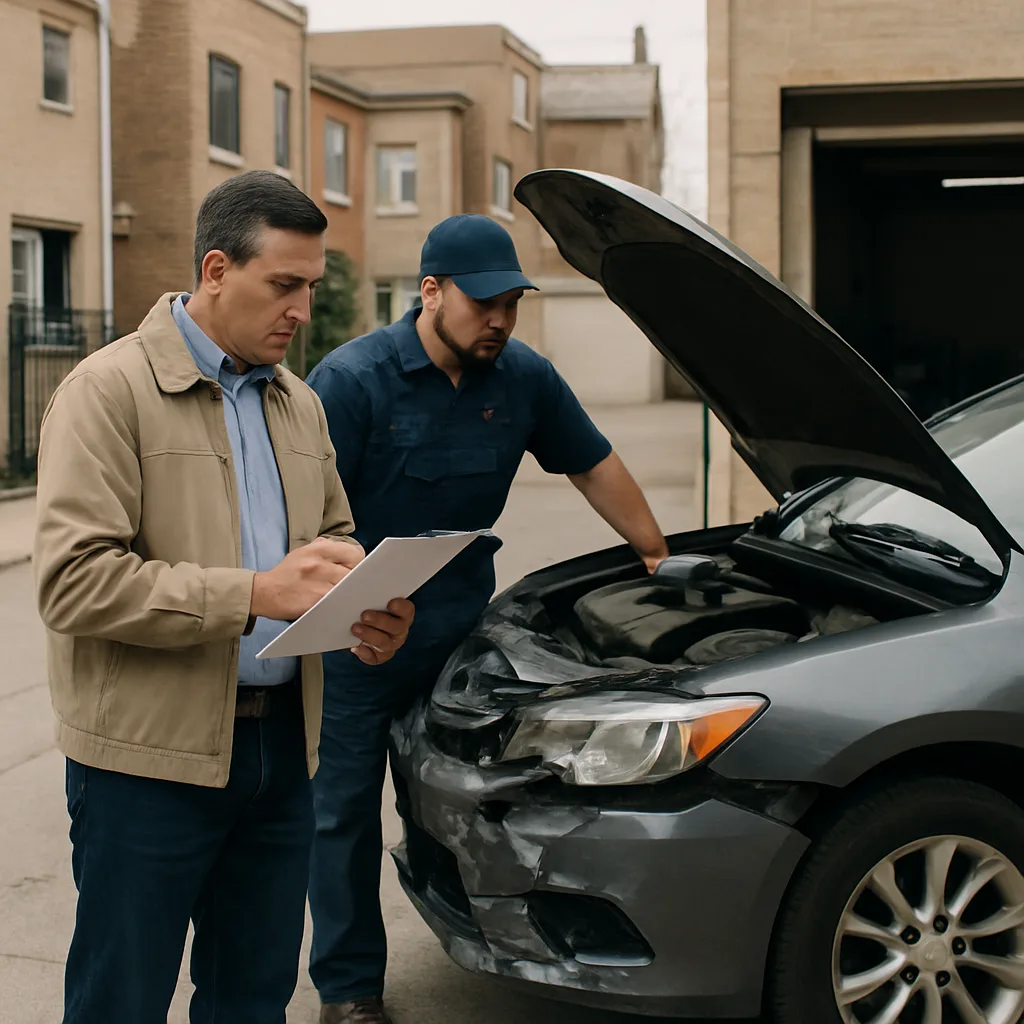
Rental Cars, Repairs, and Total-Loss Questions in Illinois
A rental vehicle can be necessary for work, school, caregiving, or ordinary transportation. Whether another insurer, your own policy, or another source may cover rental costs depends on fault, available coverage, policy language, reasonable need, and the period of use. Illinois insurance practices and claim procedures can vary, so a rental arrangement should be reviewed in light of the specific facts.
Before authorizing repairs
Repair estimates may differ because shops identify different damage, use different parts, or discover hidden damage after teardown. A driver may generally choose a repair facility, but payment responsibility and insurer procedures can affect how the repair is handled. Before authorizing work, request a written estimate and ask:
- What damage is included, and what damage may be supplemental?
- Which parts and labor rates are being used?
- Who will approve additional work discovered during repairs?
- How will the shop address delays, warranty issues, or disputed charges?
Do not assume that an insurer’s estimate is the final measure of reasonable repair cost. At the same time, avoid authorizing unexplained work without understanding who may be responsible for the charge. Preserve all versions of estimates and note when each was provided.
Total loss, salvage, and storage
When repair costs, vehicle value, or safety concerns make repair impractical, an insurer may treat the vehicle as a total loss. A valuation dispute may involve the vehicle’s condition before the crash, comparable vehicles, options, mileage, taxes, title status, and any outstanding loan or lease balance. The amount needed to pay off financing may not equal the vehicle’s actual market value.
Ask for the valuation materials and understand whether retaining the salvage affects the proposed payment. Storage charges can also grow while liability, coverage, or valuation remains unresolved. Prompt communication, documentation of dates, and written confirmation of decisions may help clarify responsibility for towing and storage expenses.
Common Property-Damage Mistakes and the Claim Process
Property claims can become harder to evaluate when records are incomplete or the vehicle changes hands without documentation. Common problems include discarding damaged parts too early, failing to photograph hidden damage, allowing storage fees to accumulate without asking questions, or signing a release without understanding which losses it covers.
A practical organization system may include:
- A timeline beginning with the collision and ending with repair or payment.
- A contact log listing the date, person, company, and substance of each communication.
- Separate folders for the police report, photographs, estimates, invoices, rental records, and payment information.
- Notes showing when the vehicle was towed, inspected, repaired, declared a total loss, or released.
When communicating with an insurer, answer factual questions accurately and avoid guessing about facts you do not know. Ask for important decisions, valuation explanations, and coverage positions in writing. A repair shop’s work order and an insurer’s estimate may not use the same terminology, so compare them carefully rather than assuming they address identical damage.
A possible diminished value claim raises a separate question: even after proper repairs, has the vehicle’s market value been reduced because it now has an accident history? The availability and proof of such a claim can depend on Illinois law, insurance coverage, the vehicle’s age and condition, the extent of damage, and market evidence. A valuation should be supported by credible information rather than an unsupported percentage.
In Chicago, IL, a dispute may resolve through insurance communications, negotiation, appraisal procedures if applicable, or litigation in an appropriate Illinois court. The proper process depends on the policy, parties, evidence, and type of dispute. Property damage should also be considered alongside, but not casually combined with, any bodily injury claim. Releases and settlement documents may address different categories of loss, making careful review important.
Frequently Asked Questions
Can I choose my own repair shop after a Chicago car accident?
Generally, a vehicle owner may seek repairs from a shop of their choice, but insurance procedures, policy terms, warranties, and payment disputes can affect the process. Before authorizing repairs, request a detailed written estimate and clarify how supplemental damage will be handled. If the insurer challenges the shop, parts, or labor rate, preserve the competing estimates and communications for review.
How long can I keep a rental car after an Illinois crash?
There is no single period that applies to every rental-car dispute. The reasonable rental period may depend on coverage, fault, vehicle availability, repair delays, total-loss processing, and whether alternative transportation was available. Keep the rental agreement, daily rate, taxes, receipts, and records showing when the vehicle was repaired or when a total-loss decision was communicated.
Does every repaired vehicle qualify for a diminished value claim in Chicago?
No. A diminished value claim depends on the facts, applicable Illinois law, available insurance coverage, the vehicle’s age and condition, the severity of the damage, and reliable evidence of reduced market value. A repair alone does not establish a particular amount. Valuation materials, prior condition records, and credible market information may be relevant when assessing this issue.
Who pays towing and storage charges after a Chicago collision?
Responsibility for towing and storage may depend on fault, insurance coverage, authorization, the timing of notice, and whether the charges are reasonable. Storage fees can increase daily, so keep every invoice and written notice. Ask the insurer, tow company, or repair facility to identify the current balance and document who authorized the vehicle’s location and continued storage.
How Vaziri Law Can Help
Vaziri Law is dedicated to helping Chicago drivers understand the property-loss issues that can follow a collision. The firm can evaluate documentation involving repair estimates, rental transportation, total-loss valuations, salvage, storage charges, and possible diminished value, while keeping those issues distinct from bodily injury damages.
Depending on the circumstances, an attorney may also help organize the claim record, assess insurer communications, and explain available options under Illinois law. Vaziri Law is committed to fighting for clients’ rights and is ready to evaluate your situation. Contact Vaziri Law to request a free consultation or case evaluation.
The information in this article is for educational purposes only and does not constitute legal advice. Contact a qualified attorney licensed in Chicago, IL for advice specific to your situation.