
Attorney At Law
A rear-end crash can look simple: one vehicle strikes another from behind, and people immediately assume the following driver caused it. But is the rear driver always at fault in a Chicago rear-end collision? Not necessarily. The answer may depend on what happened immediately before impact, whether another vehicle triggered a chain reaction, and what the available evidence shows.
For practical guidance on preserving information after a crash, review Vaziri Law’s best steps after a car accident in Illinois. This article explains why a rear driver is often investigated first, when that assumption can be challenged, and what Chicago drivers should photograph and record. It also discusses sudden stops, unsafe lane changes, brake-light issues, disputed impact points, witness accounts, medical symptoms, and insurance complications.
Is the Rear Driver Always at Fault in a Chicago Rear-End Collision?
Illinois traffic rules generally require drivers to maintain a reasonable distance and control their vehicles so they can respond to traffic. That is why a driver who strikes the vehicle ahead is often viewed as having failed to stop safely. However, being the rear vehicle does not automatically resolve every question of legal responsibility.
Illinois uses a comparative-fault approach in many personal injury claims. In general, an investigation may consider whether more than one person, vehicle, or condition contributed to the collision. The precise analysis depends on the facts, the available evidence, and the type of claim involved.
Situations That May Complicate Fault
Examples that can require closer review include:
- The lead driver stopped suddenly without a clear traffic-related reason.
- A vehicle moved into the lane immediately before impact, leaving little time to react.
- A brake-light problem made the lead vehicle’s stop harder to recognize.
- A third vehicle caused a chain reaction by striking the rear vehicle first.
- The damage pattern does not match the version of events given by one driver.
- Road design, weather, darkness, construction, or traffic congestion affected visibility or stopping distance.
These circumstances do not automatically make the lead driver or another person liable. They show why a Chicago rear-end accident lawyer may examine the entire sequence instead of relying only on the direction of impact.
What Evidence Can Challenge an Automatic Fault Assumption?
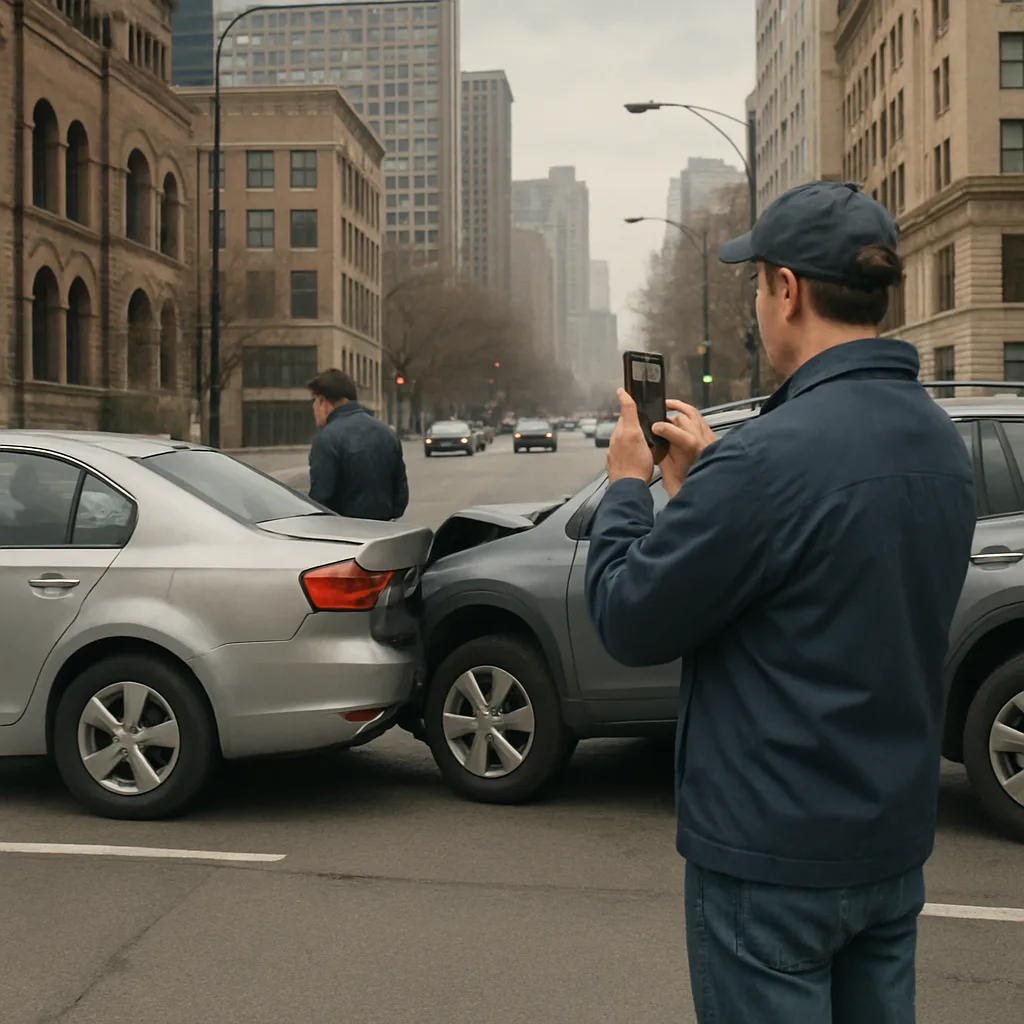
Rear-end accident evidence is most useful when it helps establish timing, vehicle positions, traffic conditions, and the force or direction of each impact. A photograph of the final damage alone may not explain how the collision began. When it is safe to do so, people involved in a Chicago crash may consider documenting the scene before vehicles are moved, while avoiding any action that creates a safety risk.
What to Photograph and Record
Useful documentation may include:
- Vehicle positions: Photograph where each vehicle stopped, the spacing between vehicles, lane locations, and whether a vehicle was partly in another lane. Take wide scene photographs as well as closer images.
- Damage and impact points: Capture every damaged area, including front and rear damage, bumper separation, paint transfer, broken lights, and debris. Do not assume the most visible damage identifies the first impact.
- Traffic conditions: Record the traffic signal, lane markings, weather, lighting, road surface, construction, parked vehicles, and any obstruction affecting visibility. Avoid photographing people or documents in a way that exposes private information.
- Witness accounts: Ask witnesses for their names and contact information if they are willing to provide it. Write down what they personally observed rather than trying to persuade them to characterize fault.
- Medical symptoms: Note pain, stiffness, dizziness, numbness, or other symptoms as they develop, and preserve medical records and bills. Do not treat a lack of immediate symptoms as proof that no injury exists; medical questions should be addressed with a qualified healthcare professional.
A person who wants a broader overview can review how to make a car accident claim in Chicago. Photographs, witness information, police reports, medical documentation, and insurance communications may all become relevant when responsibility is disputed.
What Should You Do After a Chicago Rear-End Crash?
The first priority is safety. If possible, move out of active traffic, contact emergency services when appropriate, and exchange required identifying and insurance information. Avoid arguing about fault at the scene. A short, accurate account is generally more useful than speculation about what another driver did wrong.
Common Mistakes That Can Weaken the Record
People may unintentionally make later review more difficult by:
- Moving vehicles before photographing their positions when it is safe to document them.
- Failing to capture the roadway, traffic signal, lane, or visibility conditions.
- Deleting dashcam footage or allowing phone videos to be overwritten.
- Posting statements or photographs about the collision on social media.
- Giving an insurer a detailed recorded statement before understanding what information is being requested.
- Delaying attention to physical symptoms or failing to keep related records.
These points are not instructions for a particular case. Depending on the circumstances, an attorney may advise different steps. The important principle is to preserve objective information and communicate accurately.
Chain Reactions, Lane Changes, and Uninsured Drivers
In a Chicago chain reaction crash, the vehicle that first contacted another car may not be the only vehicle whose conduct matters. Investigators may need to determine the order of impacts, where each vehicle was located, and whether a driver was pushed forward after being struck. Similarly, a disputed lane change can raise questions about which vehicle entered the other’s path.
If insurance coverage is uncertain, carefully preserve the other vehicle’s identifying information and policy details. Resources about handling a Chicago collision with an uninsured driver may help explain why coverage questions should be addressed separately from the initial fault analysis.
A person should also avoid assuming that a claim can wait simply because the damage appears minor. Illinois injury deadlines affecting a Chicago claim can depend on the injury, the potential defendant, and other facts. Laws and deadlines vary by location and may change, so prompt legal review can help clarify which issues require attention.
Frequently Asked Questions
If my car was hit from behind, do I automatically have a claim?
Not automatically. A rear impact may provide important evidence, but a potential claim can depend on whether someone else was legally responsible, whether an injury or property loss occurred, and whether the available proof supports the account of events. Insurance coverage and applicable deadlines may also matter. A qualified Illinois attorney can evaluate the specific facts rather than relying only on the position of the vehicles.
Can the front driver share responsibility for a rear-end collision?
Possibly, depending on the circumstances. A sudden stop, unsafe lane movement, malfunctioning brake lights, or another unusual event may be relevant to the fault analysis. These facts do not automatically establish responsibility for the front driver. Investigators may compare witness accounts, photographs, vehicle damage, traffic conditions, and available video before drawing conclusions about how the crash occurred.
What if several vehicles were involved in the crash?
Several vehicles can make responsibility more complicated because the sequence of impacts matters. In a chain-reaction collision, one vehicle may have struck another and then been pushed forward by a separate impact. Photos of vehicle positions and damage, witness information, reports, and video may help clarify the order of events. The applicable Illinois analysis depends on the facts and the claims being made.
Should I speak with the other driver’s insurance company?
You may need to report the collision and provide basic information, but communications with an insurer can affect how the event is documented. Avoid guessing, exaggerating, or minimizing symptoms, and do not provide information you do not know to be accurate. Depending on the circumstances, an attorney may help explain what requests mean and how to preserve relevant records while a claim is evaluated.
How Vaziri Law Can Help
Vaziri Law is dedicated to helping Chicago, IL, residents understand the evidence and legal questions that can arise after a rear-end collision. The firm is committed to fighting for clients’ rights while examining the full sequence of events, including photographs, vehicle damage, witness accounts, traffic conditions, medical documentation, insurance coverage, and possible comparative fault.
A Chicago rear end accident lawyer at Vaziri Law is ready to evaluate your situation and explain potential options based on the available facts. Contact Vaziri Law to request a free consultation or case evaluation. Speaking with a licensed attorney can help you understand which issues may deserve further attention without promising a particular result.
Disclaimer: The information in this article is for educational purposes only and does not constitute legal advice. Contact a qualified attorney licensed in Chicago, IL for advice specific to your situation.