

Attorney At Law
A driver does not have to admit using a phone for distraction to become an important issue in a crash. In Chicago, a collision may leave behind several pieces of evidence—such as a witness’s observation, a nearby security video, or a driver’s own words—that help clarify whether attention was diverted from the road. Understanding what to preserve can matter because some evidence is temporary or difficult to obtain later.
If you are asking, “What Evidence Can Prove Distracted Driving in a Chicago Crash?” the answer usually involves the complete picture rather than one conclusive item. Vaziri Law can help readers understand the types of proof that may be relevant, while recognizing that every collision has different facts. This article covers witness accounts, vehicle and nearby camera footage, photographs, cell phone records, statements at the scene, and common evidence-preservation mistakes.
What Evidence Can Prove Distracted Driving in a Chicago Crash?
Distraction can be visual, manual, or cognitive. A driver may be looking away from traffic, holding an object, or mentally focused on something other than driving. A driver’s phone is one possible source of distraction, but investigations may also examine eating, adjusting a navigation system, reaching for an item, or interacting with a passenger.
Witness observations can fill important gaps
A witness does not necessarily need to see a text message on a screen. A person may observe that the driver was looking down immediately before impact, holding a phone, drifting across a lane, failing to move after a light changed, or reacting unusually late. These details can be relevant when combined with the crash pattern and other evidence.
Useful witness information may include:
- The witness’s name and reliable contact information
- Where the witness was standing, walking, or driving
- What the witness saw before, during, and after the collision
- Whether the witness heard the driver mention a phone or another distraction
- Whether the witness made a contemporaneous report to police or emergency personnel
Memory can change, and witnesses may have limited views because of traffic, weather, darkness, or buildings along a Chicago street. An accurate account should distinguish what the person actually observed from what the person assumed.
Physical evidence and crash dynamics
Photographs of vehicle positions, damage, debris, skid marks, traffic signals, lane markings, and sight lines may help explain how the collision occurred. They do not automatically prove distraction, but they can support or challenge an account of the driver’s attention and reaction time. In Chicago, changing traffic conditions, construction, parked vehicles, and crowded intersections may make scene documentation especially important.
Cameras, Vehicle Data, and Cell Phone Records in an Illinois Investigation
Digital evidence can be valuable, but it is not always available or conclusive. A driver may have used a phone without leaving a clear record of the precise activity, while a phone record may show activity that does not establish who was using the device or whether it caused the crash. Evidence is generally assessed in context.
Potential sources include:
- Vehicle or dashboard footage. A dashcam, fleet camera, rideshare recording, or vehicle security system may capture the driver’s hands, head position, lane movement, or the moments before impact. Some systems overwrite recordings quickly, so preservation can become important.
- Nearby cameras. Businesses, residences, parking facilities, traffic-monitoring systems, and other properties may have views of a Chicago intersection or roadway. Video availability depends on camera angle, retention practices, image quality, and whether the system was operating.
- Emergency and police records. A 911 call, dispatch information, crash report, officer’s observations, and photographs may document what people reported shortly after the collision. A report is an important source of information, but it may not resolve every disputed fact.
- Cell phone records. Call logs, messages, application activity, and other device information may sometimes be sought through appropriate legal procedures. Cell phone records after a car accident can raise privacy, authentication, timing, and relevance questions. A record showing activity near the crash time is not necessarily proof that the driver was holding the phone or that the activity caused the collision.
Illinois law generally restricts texting while driving and addresses certain electronic device use, but the legal significance of a particular device record depends on the facts and the applicable jurisdiction. Laws and procedures can change, and evidence may be handled differently in an insurance claim, a civil case, or a traffic matter. In a Cook County civil proceeding, an attorney may evaluate how a digital record can be authenticated and connected to the crash rather than treating it as self-proving.
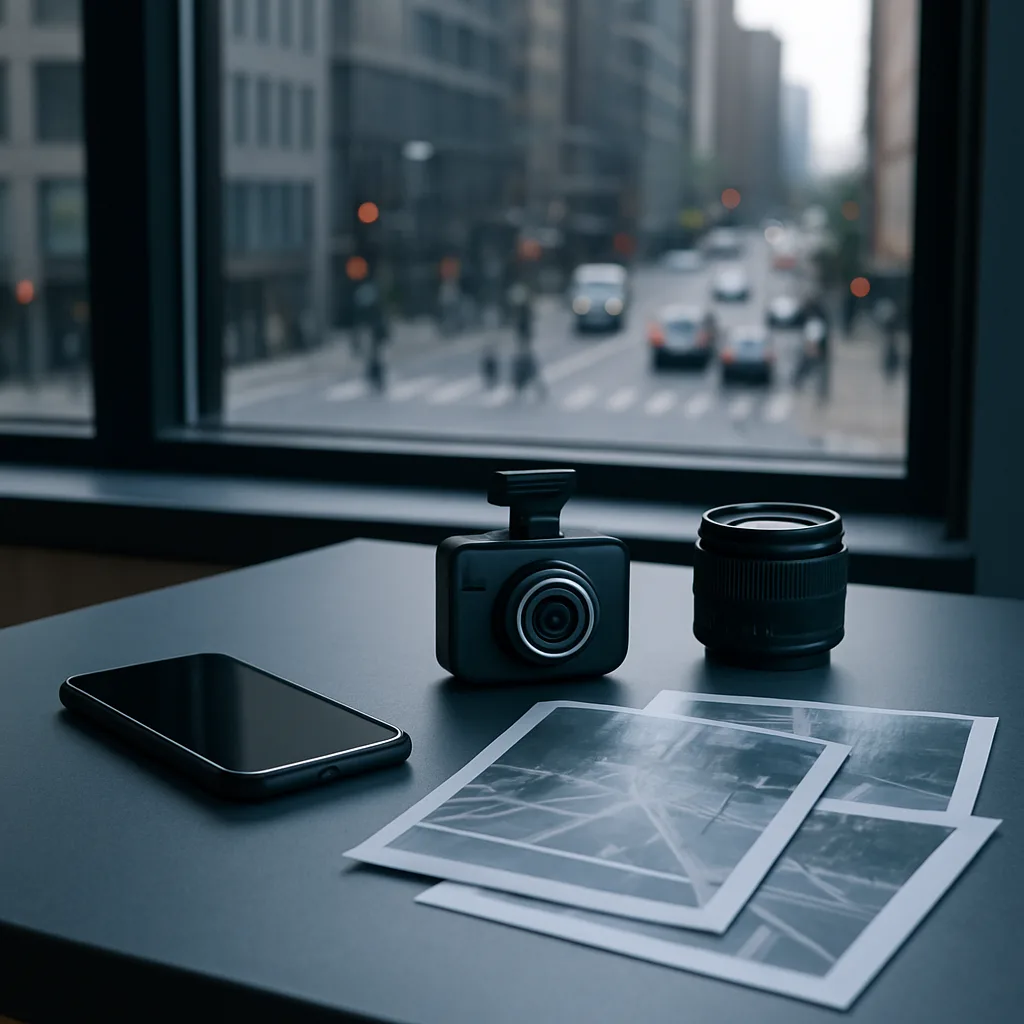
Preserving Evidence After a Suspected Distracted-Driving Crash
Evidence can be lost through ordinary events. A business may overwrite video, a vehicle may be repaired or sold, and a witness may forget details. Preservation does not mean altering, exaggerating, or collecting information in an unsafe way. It means taking reasonable steps to keep potentially relevant material in its original form and documenting where it came from.
Statements at the scene may matter
People often make spontaneous statements after a collision. A driver might say they were checking a phone, looking for an item, or did not see the traffic signal. A statement may be relevant, but the surrounding circumstances matter. The exact words, who heard them, when they were made, and whether the speaker was confused or injured can affect how the statement is understood.
Avoid turning a tense scene into an argument or attempting to pressure someone into an admission. If it is safe, note the statement as accurately as possible and identify anyone else who heard it. Do not edit a recording or post private crash content online in a way that could complicate later review.
Common preservation mistakes
People involved in Chicago crashes sometimes unintentionally weaken available evidence by:
- Waiting too long to identify nearby cameras
- Posting photographs, accusations, or speculation on social media
- Deleting texts, call information, dashcam files, or photographs
- Repairing or discarding a damaged vehicle before it can be documented
- Relying on memory instead of writing down observations soon after the event
- Assuming that a police report will contain every witness statement or video source
A driver’s conduct after the crash is not automatically proof of what happened before impact. Similarly, the absence of video or a phone record does not by itself establish that distraction did not occur. An attorney evaluating a suspected distracted-driving crash may review the available evidence, identify gaps, and consider whether additional information can be obtained through an insurance investigation or civil discovery.
Frequently Asked Questions
Can a witness prove a driver was texting if the witness did not see the phone screen?
Not necessarily by that observation alone. A witness may still provide useful testimony about a driver looking down, holding an object, drifting, or reacting late. The value of that testimony depends on the witness’s vantage point, timing, consistency, and the other evidence available. A court or insurer may consider the entire set of circumstances rather than requiring a witness to identify the exact activity on a screen.
How can I find camera footage after a Chicago car accident?
Potential sources may include nearby businesses, residences, parking facilities, vehicles, and public or private security systems. Availability varies because cameras may not point toward the crash, recordings may be overwritten, or access may require consent or formal legal process. A driver or passenger should not trespass or confront property owners. Depending on the circumstances, an attorney may help identify possible sources and address preservation requests.
Do cell phone records automatically show that a driver caused the crash?
No. A phone record may indicate a call, message, or other activity near the collision time, but it may not show who was holding the device, where it was positioned, or whether the activity affected driving. Timing, device data, witness observations, vehicle evidence, and the collision sequence may all matter. The legal effect of a record depends on authentication, relevance, privacy considerations, and the Illinois case context.
What if the driver denies using a phone at the scene?
A denial does not necessarily resolve the issue, and it does not automatically establish dishonesty or liability. Other evidence may include witness accounts, video, physical evidence, electronic records, and the driver’s later statements. Scene conversations can be incomplete because people may be injured, stressed, or focused on immediate safety. Preserving accurate information without confrontation may help an attorney assess the circumstances more objectively.
How Vaziri Law Can Help
Vaziri Law is dedicated to helping injured people understand the evidence that may be relevant after a suspected distracted-driving collision. The firm can review available photographs, witness information, crash documentation, vehicle footage, and other records to evaluate how the facts may fit together. Depending on the circumstances, a distracted driving lawyer in Chicago may also assess potential preservation issues and the steps involved in pursuing an insurance or civil claim.
If you or a family member was involved in a Chicago, IL crash and distraction may have played a role, contact Vaziri Law for a free consultation or case evaluation. The firm is committed to fighting for your rights while providing information tailored to the facts that can be established.
The information in this article is for educational purposes only and does not constitute legal advice. Contact a qualified attorney licensed in Chicago, IL for advice specific to your situation.