

Attorney At Law
A crash in Chicago can leave you dealing with vehicle damage, medical appointments, and calls from insurance adjusters—sometimes before you understand the full extent of what happened. One common request is for a recorded statement. So, should you give the insurance company a recorded statement after a Chicago crash? The answer depends on which insurer is calling, what your policy says, and the circumstances of the collision.
A recorded statement can preserve useful facts, but it can also create confusion if you are asked to describe symptoms, speed, visibility, or fault before you have complete information. This does not mean every adjuster is acting improperly. Insurers generally investigate claims, and an adjuster may need information to evaluate coverage and responsibility. However, you do not have to treat every request as an emergency or answer uncertain questions by guessing. Vaziri Law offers this practical overview of what to expect, how to handle communications, and when an attorney may help you evaluate your options.
Recorded Statement After a Chicago Crash: What the Request Means
A recorded statement is an interview that an insurance representative preserves through an audio recording, written transcript, or similar method. The adjuster may ask you to confirm basic information and describe the collision. The statement can later be compared with medical records, photographs, police reports, vehicle damage, witness accounts, and other evidence.
Which insurance company is calling?
The source of the request matters. Your own insurer may ask for information under the terms of your policy. Policies can include cooperation provisions, and the effect of refusing or delaying a request depends on the specific policy and circumstances. The other driver’s insurer generally does not have the same contractual relationship with you, even though it may want your account while investigating its insured’s claim.
In Chicago, IL, a request may arrive by phone, email, or letter after a crash on a city street, expressway, or suburban road leading into Cook County. You can ask for the representative’s name, company, claim number, and the purpose of the interview. You may also ask whether the request concerns property damage, bodily injury, coverage, or another issue.
Why adjusters ask for statements
An adjuster may seek to clarify:
- Where and when the crash occurred
- Which vehicles were involved and where they were positioned
- Traffic signals, lane movement, weather, and visibility
- What you noticed before and after impact
- Whether you reported pain or sought medical evaluation
- The damage you observed and other available evidence
A careful, accurate account can be helpful. The risk arises when a person feels pressured to give a complete opinion despite not remembering a detail or not yet knowing how an injury will develop. A recorded statement is not a deposition, but it is still a communication that may be used during claim negotiations or a later dispute.
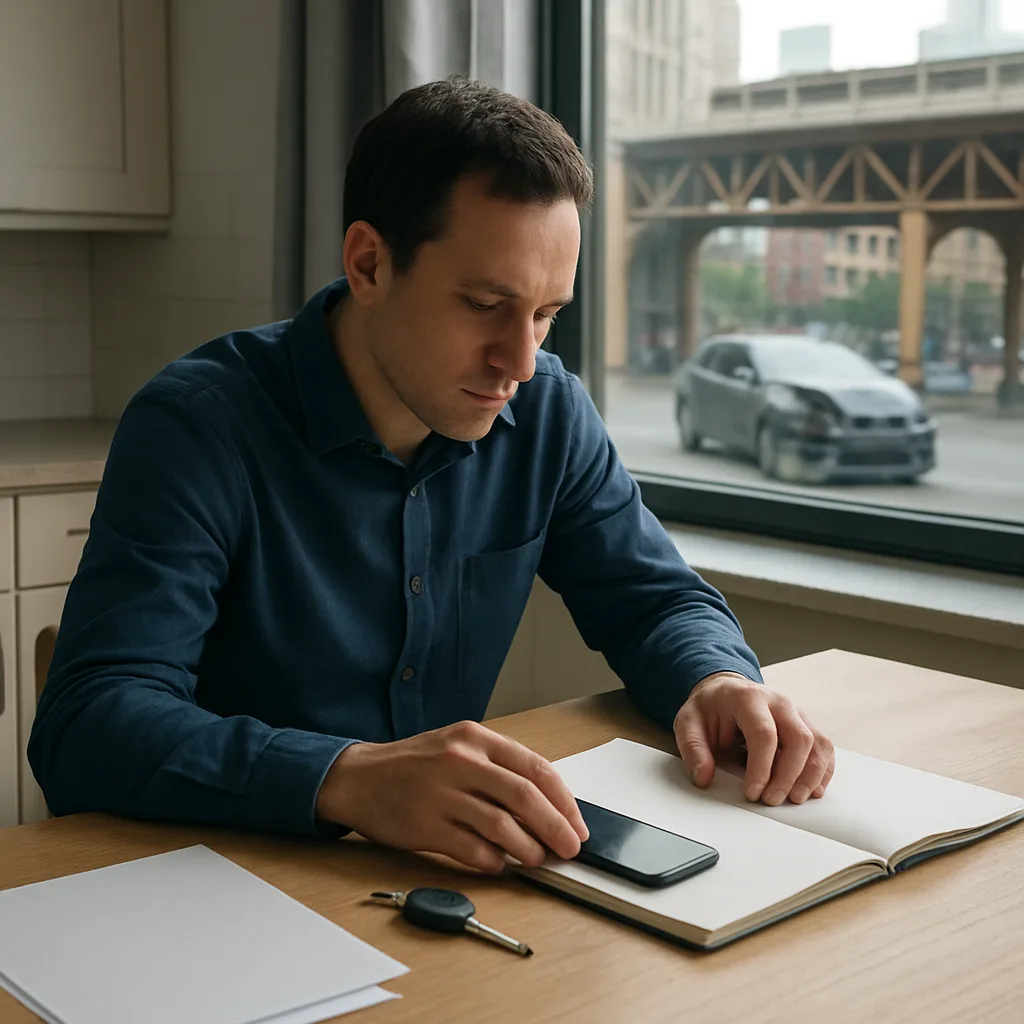
How to Handle an Insurance Adjuster Statement in Illinois
Generally speaking, you may want to control the conversation rather than respond immediately to an unexpected call. You can be courteous without agreeing to an interview on the spot. Ask the caller to identify the insurer and explain the request, then record the contact information for your files.
Before any statement, consider creating a simple communication log that includes:
- The date and time of each call
- The name and contact information of the representative
- The claim number and vehicles involved
- What documents or information the representative requested
- Whether a recording or written statement was discussed
You should not alter, delete, or hide relevant evidence. Keep photographs, repair estimates, medical records, bills, appointment information, witness contacts, and messages in an organized location. If you do provide factual information, answer only what you know. “I do not remember” or “I am not sure” can be more accurate than filling a gap with an assumption.
Avoid guessing about symptoms or fault
Pain and other symptoms may not be fully clear immediately after a collision. Avoid predicting how long a condition will last, declaring that you are completely recovered, or assigning a medical cause without guidance from a qualified healthcare professional. This article does not provide medical advice; questions about diagnosis and treatment should be directed to a healthcare provider.
Likewise, avoid offering a legal conclusion such as “the crash was entirely my fault” or “the other driver is definitely liable” when you do not know all the facts. You can describe what you saw, heard, and did. Illinois claims may involve disputed facts, multiple contributing circumstances, and evidence that is not available during an initial call. An Illinois attorney can explain how those issues may affect your situation.
Common Mistakes When Speaking With the Insurance Company
The initial call can feel routine, but small communication mistakes may create later disagreements about what was said. The following practices can help you communicate more carefully without turning an ordinary investigation into a confrontation.
Mistakes to avoid
- Answering an unknown caller without verifying the insurer. A person who claims to be an adjuster should be able to identify the company and claim.
- Providing a broad medical release without understanding its scope. Ask what records are requested and why. Depending on the circumstances, an attorney may review proposed authorizations.
- Speculating about speed, distance, or timing. Estimates given under pressure may be inaccurate.
- Minimizing symptoms. Saying that you are “fine” as a casual response may not describe how you actually feel later. Use precise, honest language.
- Arguing with the adjuster. A disagreement on the phone rarely resolves the factual issues. Keep communications professional and preserve them.
- Assuming a police report decides the claim. A report may be important evidence, but insurers and courts can consider other evidence as well.
If you already gave a statement and later remember an important detail, do not try to rewrite history or conceal the earlier account. Keep notes about what you recall and discuss the situation with a qualified attorney. In Cook County and elsewhere in Illinois, the significance of a statement depends on the facts, available evidence, insurance policy language, and procedural posture of the claim.
For a Chicago car accident lawyer evaluating an insurance-company communication, useful materials may include the recording or transcript, call notes, photographs, medical documentation, vehicle records, and correspondence. An attorney may help identify inconsistencies, explain the difference between your insurer’s request and a third-party request, and communicate on your behalf when appropriate.
Frequently Asked Questions
Can the other driver’s insurance company require me to give a recorded statement?
Usually, the other driver’s insurer does not have the same contractual relationship with you that your own insurer may have under an insurance policy. Its request is generally part of the claim investigation, not automatically a court order. The specific circumstances matter, including whether a lawsuit has been filed or another legal process applies. Consider asking for the request in writing and seeking individualized advice before responding.
What should I do if an adjuster asks about my medical history?
An adjuster may ask about prior conditions or treatment when investigating an injury claim. Answering broadly or signing an unrestricted authorization can raise privacy and relevance concerns. You can ask what records are sought and how the request relates to the collision. Depending on the circumstances, a qualified Illinois attorney may help you assess the request before you provide information or sign anything.
Is a recorded statement the same as a deposition in Illinois?
No. A recorded statement is typically an insurance-investigation interview, while a deposition is a formal discovery process connected with litigation and conducted under applicable court rules and procedures. The setting and legal consequences can differ. Even so, an insurance statement may become relevant in a later dispute if the account is compared with testimony or other evidence. Legal guidance can help clarify the process.
What if I already gave an inaccurate answer to the adjuster?
People can misremember details after a stressful collision or misunderstand a question. Do not intentionally change, conceal, or destroy information. Write down what was asked, what you answered, and what you now believe is accurate. Preserve related communications and discuss the issue with a licensed attorney. The importance of the error depends on its subject, materiality, timing, and the other evidence in the claim.
How Vaziri Law Can Help
Vaziri Law is dedicated to helping Chicago crash victims understand insurance communications and the information that may matter in a personal injury claim. The firm can review the circumstances of the collision, the identity of the insurer, available records, and any statement already provided. Depending on the situation, an attorney may help organize evidence, explain potential issues under Illinois law, and communicate with an insurance representative.
If you have questions about an insurance adjuster statement in Illinois, Vaziri Law is ready to evaluate your situation. Contact the firm for a free consultation or case evaluation and discuss your legal options with a qualified member of the team.
The information in this article is for educational purposes only and does not constitute legal advice. Contact a qualified attorney licensed in Chicago, IL for advice specific to your situation. Laws vary by jurisdiction and may have changed since publication.