
Attorney At Law
A motorcycle crash can leave an injured rider facing more than physical recovery. Insurance companies may quickly focus on whether the rider wore a helmet, where the motorcycle was positioned, or whether a roadway condition contributed to the collision. Those questions matter, but they should be examined through reliable evidence rather than assumptions about motorcyclists. A Chicago motorcycle accident lawyer who evaluates rider injury claims can help organize the issues and identify what facts still need to be investigated.
This article explains how Illinois Motorcycle Accident Claims: How Helmet Use and Road Conditions May Affect a Case in Chicago, IL, including helmet condition, protective clothing, visibility, lane position, road defects, turning vehicles, and comparative fault. It also discusses photographs, vehicle damage, scene data, video, and independent witnesses. Vaziri Law provides legal information to help injured riders understand the questions that may arise before deciding whether to seek a consultation.
How Helmet Use and Road Conditions Affect Illinois Motorcycle Accident Claims
Helmet use is often treated as a simple yes-or-no issue, but a careful claim review may require more detail. Investigators may examine whether a helmet was present, its condition after the crash, whether it was properly secured, and what injuries are alleged to relate to head protection. The condition of a helmet can be evidence, but it does not by itself establish who caused a collision or resolve every injury question.
Illinois helmet rules and injury allegations
Illinois law includes requirements concerning protective headgear for certain motorcycle riders, including riders under 18. Laws can change, and the legal effect of helmet use may depend on the rider’s age, the facts of the crash, and the injury being claimed. A helmet allegation may be relevant to damages without answering whether another driver failed to yield, turned across a rider’s path, or failed to keep a proper lookout.
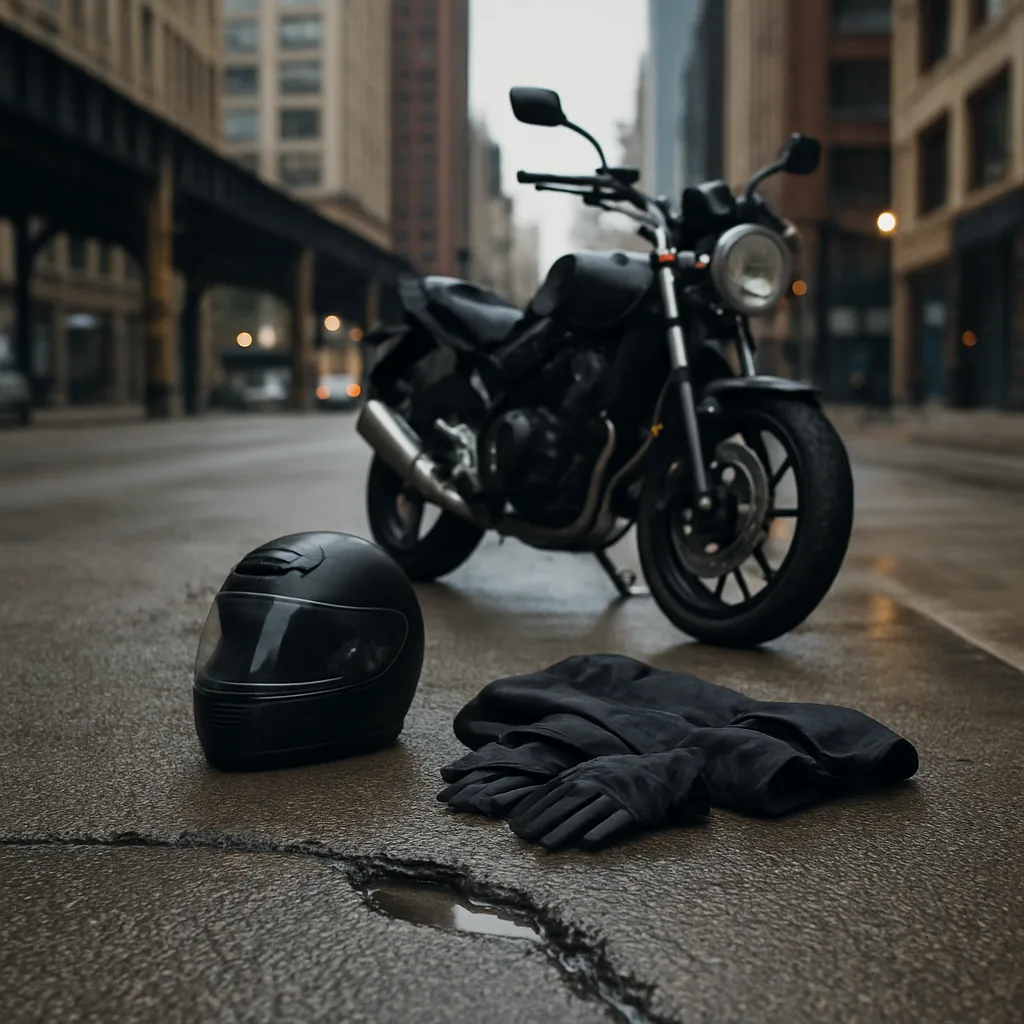
Riders should generally preserve the helmet, visor, jacket, gloves, boots, and other protective gear in the condition they were in after the crash. Cleaning, discarding, or repairing those items may remove information about the impact. Photographs from several angles, along with purchase or maintenance records when available, may help show what equipment was used and how it was affected.
Road conditions are a separate issue
Potholes, uneven pavement, construction areas, gravel, standing water, poor lighting, and obscured markings can affect traction and visibility. In Chicago, IL, roadway conditions may change quickly because of traffic, weather, repairs, or street work. Photographs should show the condition from multiple distances and perspectives, with the surrounding intersection or roadway included for context.
Evidence That May Counter Assumptions About a Motorcycle Crash
A motorcycle accident claim often turns on the quality and timing of the evidence. A rider’s account is important, but it may be strengthened by objective information showing vehicle movement, roadway conditions, and the sequence of events. Evidence can also address common disputes about whether a motorcycle was visible or whether the rider occupied a lawful lane position.
Physical and scene evidence
Depending on the circumstances, useful evidence may include:
- Photographs of the motorcycle, the other vehicle, helmets, protective gear, debris, skid marks, surface defects, and sightlines.
- Vehicle damage and repair estimates that may help show the direction and force of impact.
- Chicago Police Department crash materials or other available incident records, while recognizing that a report is not necessarily a final determination of civil liability.
- Traffic signal information, roadway design, lighting conditions, weather observations, and nearby construction records.
- Names and contact information for independent witnesses who saw the approach, impact, or events immediately afterward.
A rider may also want to identify nearby businesses, residences, vehicles, or public systems that could have captured the crash. Original files are generally more useful than altered or compressed copies because metadata and surrounding footage may provide context. The Illinois injury-case rules for using dashcam footage as crash evidence may be relevant when dashcam, helmet-camera, phone, or traffic-camera video exists.
Visibility, lane position, and turning errors
Drivers sometimes report that a motorcycle appeared suddenly or was difficult to see. That statement does not automatically resolve fault. Investigators may consider lighting, traffic, vehicle blind spots, speed evidence, signal use, lane position, and whether a driver turned or entered traffic without a reasonable opportunity to avoid the motorcycle. Independent witnesses and video can be especially important when the parties remember the sequence differently.
Illinois follows a comparative-fault approach in many injury cases. A person’s alleged share of responsibility can affect damages, and a substantial share may limit recovery under Illinois rules. The analysis is fact-specific. Evidence about a road defect, a vehicle’s turn, helmet condition, and the rider’s conduct may involve separate questions rather than one broad conclusion that the rider was responsible.
What Happens After an Illinois Motorcycle Accident Claim Begins?
After a crash, the claim process may involve medical documentation, insurance communications, evidence collection, liability analysis, and damages evaluation. Prompt medical attention can create records of reported symptoms and the care provided, but treatment decisions belong to the rider and medical professionals. Riders should keep photographs, bills, wage information, repair records, and correspondence organized.
The general process may include:
- Initial investigation: Counsel or an insurer may review the crash report, photographs, witness accounts, vehicle damage, and available video.
- Liability assessment: The investigation may examine driver conduct, roadway conditions, visibility, lane position, helmet use, and comparative fault.
- Damages documentation: Records may address medical expenses, lost income, property damage, and other legally recognized losses, depending on the claim.
- Insurance discussions: A claim may be presented and negotiated, although disputed facts can make early evaluation important.
- Litigation if necessary: If the parties cannot resolve liability or damages, a lawsuit may be considered subject to applicable Illinois procedures and deadlines.
The motorcycle crash claim timeline from medical care through litigation provides additional context about these stages. Filing periods can depend on the defendant, the type of claim, and other circumstances. Riders should review Illinois injury deadlines that can affect a motorcycle accident claim early, because informal insurance discussions do not necessarily extend a legal filing period.
One common mistake is treating an insurer’s first explanation as the final account of the crash. Another is discarding damaged equipment or failing to preserve original video. In Chicago, IL, conditions at an intersection may change before photographs or measurements are obtained. A timely evidence review may help distinguish a helmet-related damages argument from the separate question of who caused the collision.
For additional discussion of preserving the helmet, protective gear, roadway photographs, vehicle damage, reports, and witness information, see this Chicago motorcycle claim guidance on preserving evidence and proving fault.
Frequently Asked Questions
Does wearing a helmet determine who is responsible for a Chicago motorcycle crash?
No. Helmet use and crash responsibility are related but separate issues. A helmet allegation may affect how an insurer or court evaluates certain injuries, depending on the facts and applicable Illinois law. It does not automatically determine whether a driver failed to yield, turned improperly, or violated another duty. The full evidence may include vehicle damage, photographs, witness statements, video, and roadway conditions.
Can a pothole or construction condition affect an Illinois motorcycle accident claim?
It may. A roadway defect or construction condition can become relevant if it contributed to loss of control, visibility problems, or the sequence of impact. The potential legal issues may depend on who controlled or maintained the location, whether notice existed, and whether another driver also contributed. Photographs, location details, weather information, and public or private maintenance records may help evaluate the issue.
What if a driver says the motorcycle was hard to see?
Visibility is usually a fact-specific question rather than a complete defense. Relevant information may include lighting, traffic, vehicle position, turn signals, blind spots, speed, lane placement, and available sight distance. Dashcam, helmet-camera, traffic-camera, phone footage, and independent witness accounts may help clarify what a driver could reasonably observe before turning or entering the motorcycle’s path.
Should damaged motorcycle gear be thrown away after a crash?
Generally, preserving damaged equipment may be important because its condition can provide information about the incident and alleged injuries. Helmets, jackets, gloves, boots, and other gear should not be discarded or altered before their evidentiary value is considered. Riders can photograph the items and store them safely. Depending on the circumstances, an attorney may advise on preservation and inspection issues.
How Vaziri Law Can Help
Vaziri Law is dedicated to helping injured riders understand the evidence and legal issues that may shape an Illinois motorcycle accident claim. The firm is committed to fighting for clients’ rights while examining the details that broad assumptions can overlook, including helmet condition, protective equipment, roadway photographs, vehicle damage, visibility, lane position, turning errors, scene data, and independent witnesses.
A Chicago, IL motorcycle crash may involve multiple potential sources of evidence and more than one theory of responsibility. Vaziri Law is ready to evaluate your situation, explain potential options, and discuss the claim process in a consultation. Contact the firm for a free case evaluation.
The information in this article is for educational purposes only and does not constitute legal advice. Contact a qualified attorney licensed in Chicago, IL for advice specific to your situation.